
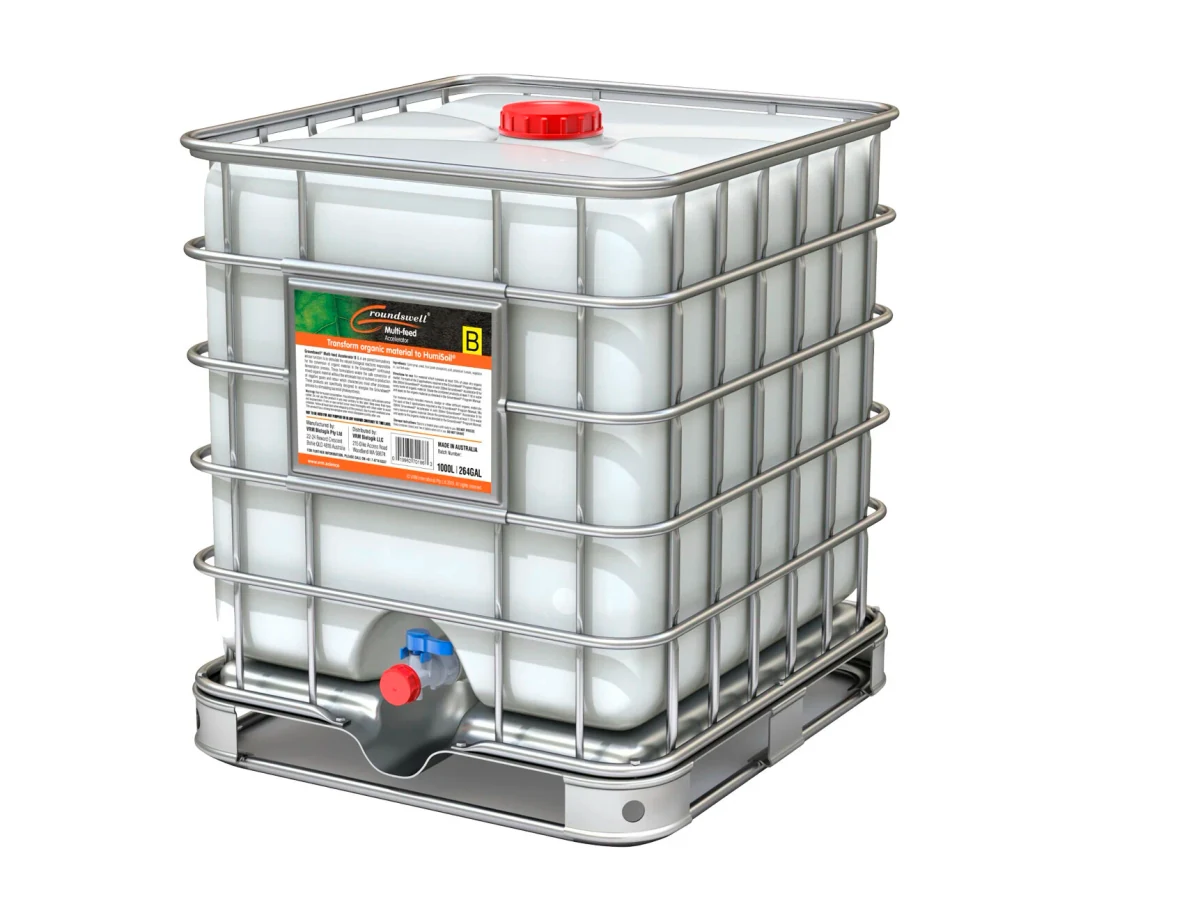
GROUNDSWELL MULTI-FEED ACCELERATOR B (GMFA-B)
VRM Biologik. Australian National Distributor: 4Sight Global.Description
GMFA A&B are proprietary paired biological formulations that initiate the Groundswell® process, transforming organic waste into HumiSoil®. Together they activate controlled biological fermentation, creating a one-touch, static pile alternative to conventional composting that retains carbon, nutrients and biological value.
Pack Sizes
15 L Cube | 1,000 L IBC
Data Sheet – GROUNDSWELL MULTI-FEED ACCELERATOR B (GMFA-B) technical data sheet (PDF)Enquire About This Product
Categories
VRM Biologik
Tags
Soil Amendments
Frequently Asked Questions
Groundswell® Multi-Feed Accelerator A & B are proprietary paired biological formulations used together to initiate the Groundswell® process. When diluted and applied to suitable organic feedstock, they activate the controlled biological fermentation that transforms manure and organic waste into HumiSoil®. For farmers, this provides a practical pathway to convert existing waste streams into a valuable biological soil amendment rather than continually handling, stockpiling or conventionally composting them.
Groundswell® is a controlled biological fermentation process that transforms suitable organic material into HumiSoil®. Accelerator A & B provide the paired biological inputs that initiate this transformation. Once the feedstock is correctly prepared, inoculated, brought to the required moisture level, formed into the specified pile and covered, the biological process continues for approximately six months. This creates a simple, low-handling pathway from organic waste to a biologically active, humus-building soil amendment.
Yes. Groundswell® uses a static pile approach and does not require the regular turning and aeration associated with conventional composting. After the feedstock is prepared, treated with Accelerator A & B, formed correctly and covered, the pile is left largely undisturbed while biological fermentation progresses. This one-touch approach can substantially reduce labour, machinery use, fuel and ongoing pile management while retaining more of the carbon, nutrients, moisture and biological value within the organic material.
You don't routinely turn it. A correctly established Groundswell® pile is handled during initial preparation, inoculation and construction, then covered and left undisturbed for approximately six months while the biological process matures. Unlike conventional composting, there is no scheduled turning, remixing or aeration program. For livestock producers managing large volumes of manure or organic waste, that means significantly less operator time, loader or turner use, diesel consumption and ongoing pile management.
Groundswell® can accommodate a range of suitable solid and semi-dry organic feedstocks, making it particularly relevant to livestock and intensive agricultural operations. Potential materials include manure, bedding, spoiled feed, silage and hay residues, feed-pad scrapings and other suitable biodegradable organic materials. This allows beef feedlots, dairies, piggeries, poultry operations and mixed farms to use locally available organic resources as feedstock for HumiSoil® production rather than treating them solely as a waste-management liability.
The Groundswell® process takes approximately six months. After suitable organic material has been prepared, treated with Accelerator A & B, adjusted to the required moisture content, formed into the correct pile dimensions and covered, it is left to undergo biological fermentation. Importantly, this maturation period does not require the continual turning associated with conventional composting. Farmers therefore gain a predictable production cycle with minimal ongoing handling while the organic feedstock is transformed into HumiSoil®.
HumiSoil® is the finished biological soil amendment created through the Groundswell® process. Accelerator A & B initiate the biological reactions that transform suitable organic feedstock into a humic, microbially active material designed to support humus development once returned to soil. HumiSoil® helps improve soil structure, nutrient cycling, biological activity and moisture dynamics, enabling farmers to turn existing organic waste into an input that can contribute to healthier soils and reduced dependence on purchased fertilisers.
Yes - the economic opportunity comes from converting an existing waste stream into a productive farm input while simplifying how that material is managed. The Groundswell® static pile process eliminates routine turning, reducing labour, machinery and fuel requirements compared with conventional composting. The resulting HumiSoil® can then contribute to lower purchased fertiliser requirements and improved soil moisture efficiency. For livestock operations with continually expanding manure stockpiles, this creates value at both ends: lower waste-management effort and a useful soil amendment.
Yes. Groundswell® is particularly suited to farms and livestock enterprises that already generate significant volumes of manure and organic residues. Accelerator A & B allow those materials to become feedstock for on-farm HumiSoil® production rather than an accumulating waste problem. Beef feedlots, dairy drylots, piggeries, poultry operations and other intensive livestock businesses can therefore create a valuable biological soil input from resources already available on-site, supporting a more circular, lower-input farming system.
Accelerator A & B enable the Groundswell® process to follow a fundamentally different pathway from conventional composting. Rather than repeatedly turning organic material to drive aerobic decomposition, Groundswell® uses controlled biological fermentation within a covered static pile. This greatly reduces handling while retaining more carbon, nutrients and moisture in the material. The end result is HumiSoil®—a biologically active soil amendment designed not simply to dispose of organic waste, but to return greater biological and agronomic value to the farm.
HumiSoil® is designed to support humus formation, beneficial microbial activity, nutrient mobilisation and improved soil moisture dynamics. The supplied case studies report outcomes including reduced nitrogen fertiliser use, reduced irrigation requirements, increased pasture production and sustained growth under dry conditions. Results will vary according to soil, climate, application and management, but the key farmer benefit is turning organic waste into an input capable of supporting both lower production costs and more resilient soil performance.