Pastures can save the planet
Fancy that. The fabled ‘greener pastures’ are, in fact, greener pastures — for the planet. The irony is just too enticing not to be this month’s focus. I ventured the idea that dairy can save the planet last month and admit, on the surface, it may seem a little optimistic. Notwithstanding, let's entertain the possibility for just a moment. Earth-friendly practices and sustainable and/or regenerative ag specialists advocate (more-or-less in order):
· Always maintain groundcover. If not green and growing, at least
a thick mat of armour — tick.
· Maintain or increase diversity in pastures and crops, that is,
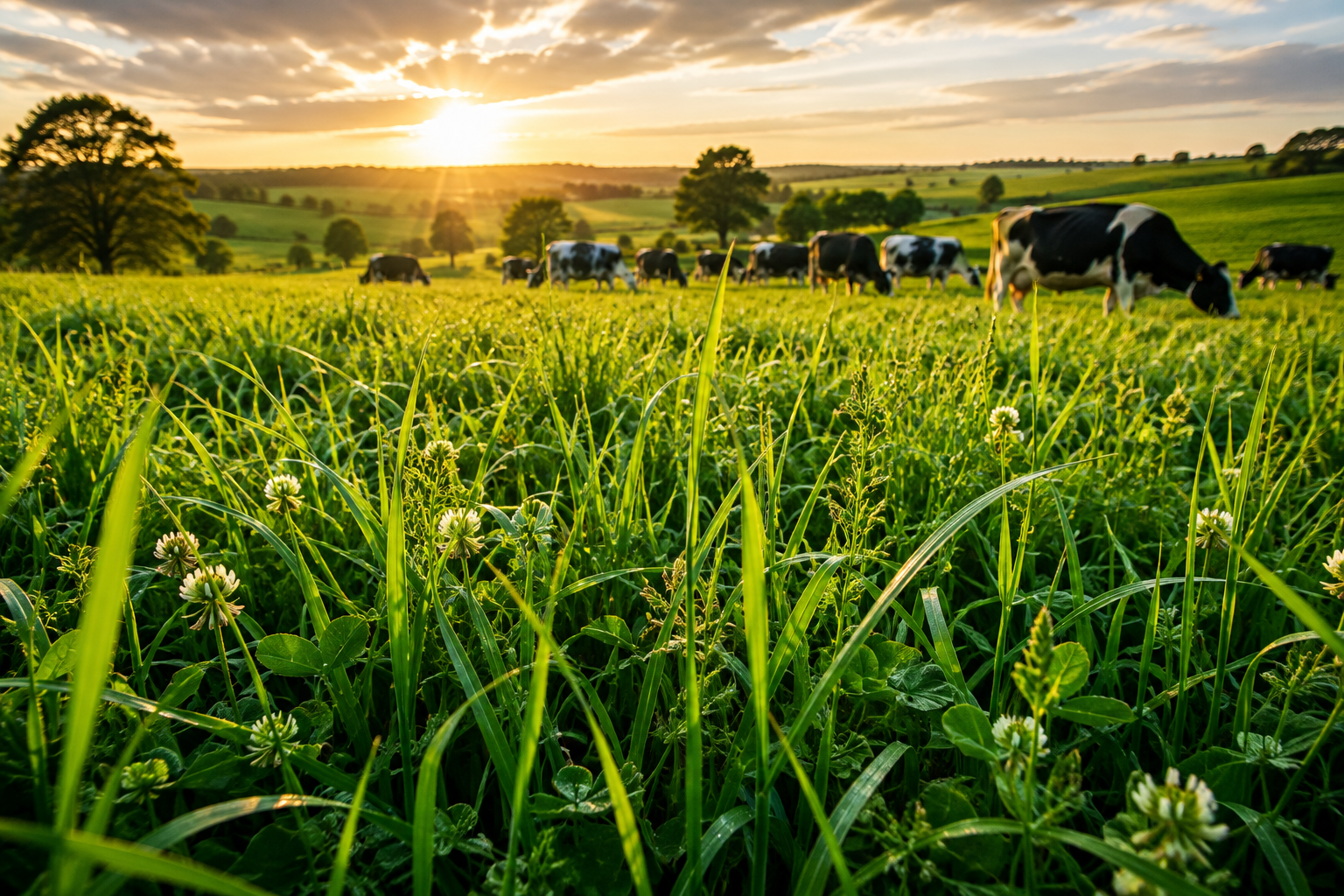
multispecies. Rye/clover pastures almost qualify (two principals with attendant weeds), and the popular inclusion of plantain and chicory better yet — almost a full tick of that box.
· Include livestock (a) and employ them in an intensive grazing
rotation (b) — two ticks there. And maybe even a third as cows eat a lot and crap a lot and that is good s**t for the planet.
· Plant species that sequester (munch) a lot of atmospheric
carbon (C). Store it and/or pump it into the ground for storage there — hmm, I reckon that’s up to another four ticks, but I will need to explain how-so.
When the conversation is about great C “harve-stores’”, the ignorant assumption is that trees own this niche.
However, trees grow slowly at first before picking up momentum and plonking a heap of C down later in life as wood, and a bit more as root systems — trapping about 11 tonne/C/year above ground and a bit more below.
Oh, and then we cut a decent bunch of them down to burn (where does that C go?).
True, some continue growing and others are stored in our houses as frames and floorboards and so on, but the accounting of trees in the C equation is typically more than generous.
How does pasture stack up in comparison?
Pretty well as it turns out, even with some lazy mathematics. Long-term ley pastures are frequently demonstrated on par with forestry for capturing C.
Such pastures are not highly productive dairy sustenance, and this is an important distinction, as well-managed dairy pastures have a yield potential in excess of 35 tonne/DM/ha and such yields gobble up and lot of C, and importantly a lot of nitrogen (N) also.
Tragically, the potential of dairy pastures, and the dairy industry to positively impact the planet is lost in, as Shakespeare might lament, the “much ado about nothing” that is methane as I explained last month. What is relevant is that cows eat C ley pastures — and lots of it. And to keep them fed, we need lots of grass, and that means lots of CO2 removed from the atmosphere. In summary, productive pastures are inherently fantastic for the planet, and that’s a massive tick. To be sure, our pastures need to be ‘greener’ — hopefully I have given you a sense of why. Next month I will explain how to achieve highly productive, earth- friendly pastures.
Previous: Punching bag to climate hero | Next: Greener pastures are ahead
Part 1 of 9 — Dairy Sustainability, Soil Health & Farm Innovation Series
Originally published in Dairy News Australia, 15 June 2023, by Dr Les Sandles.
Have questions about this topic?
Our team is ready to help with expert advice tailored to your operation.
Contact UsRelated Articles
In a pickle over the peer review process
How should farmers balance peer-reviewed research with field experience and emerging innovation? This article considers the gap between statistical certainty, practical evidence and economically meaningful results on farm.
Soil & Pasture ScienceHubris harms our humus
Humus plays an important role in soil structure and water retention. Explore the relationship between soil organic matter, soil biology, calcium-to-magnesium balance and the ability of dairy soils to capture and retain water.
Soil & Pasture ScienceBuild it and they will come
Healthy soil biology depends on creating the right physical and chemical environment. This article explores soil structure, pore space and the relationship between calcium and magnesium in building functional dairy soils.