In the Spotlight: Grassdale Feedlot
Inside Australia’s largest feedlot: scale, nutrition and resource efficiency
As part of the Australian Wagyu Association’s WagyuEdge ’26 Post-Conference Tour, 4Sight had the opportunity to visit Mort & Co’s Grassdale Feedlot on Queensland's Darling Downs.
There are large agricultural operations, and then there is Grassdale.
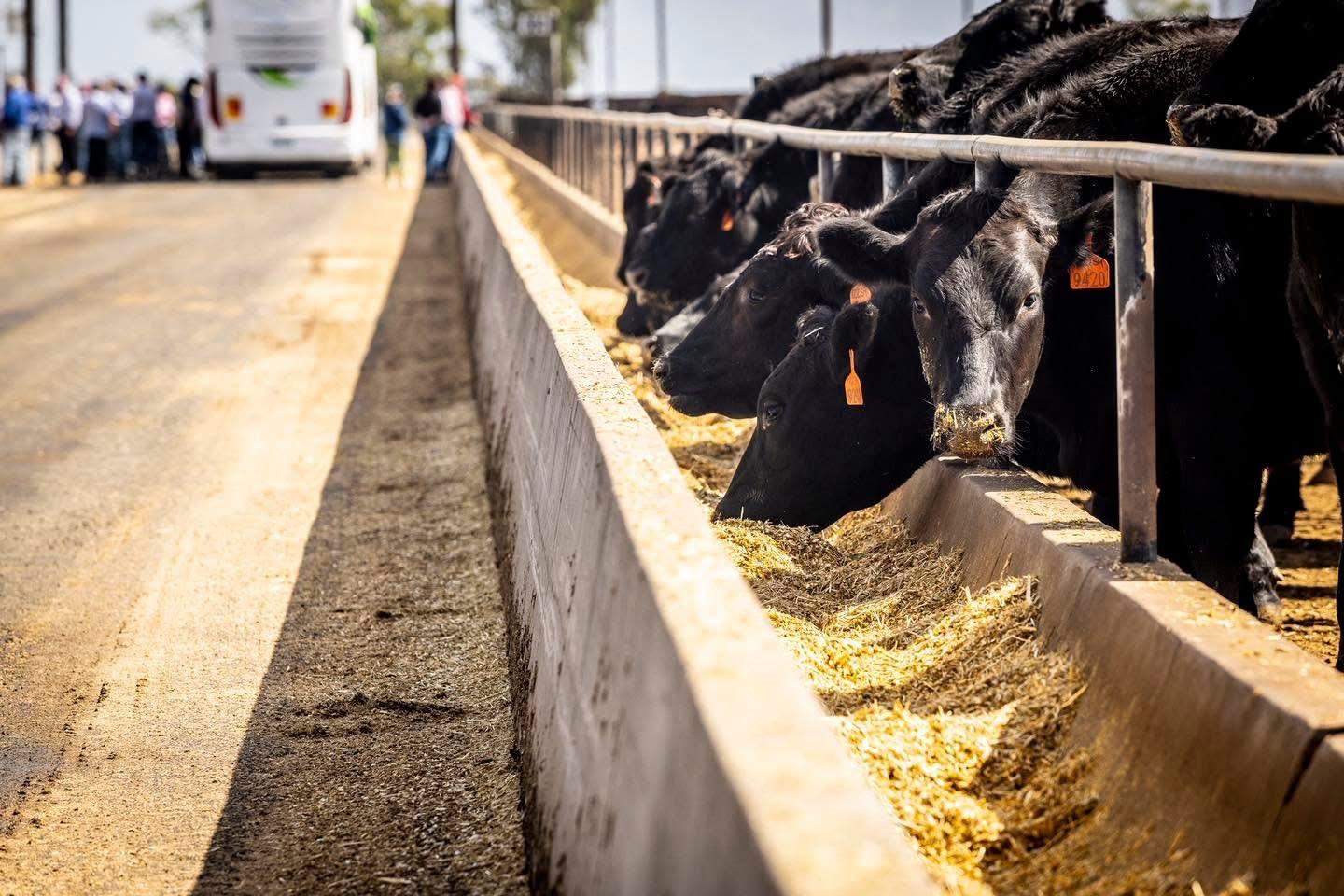
Described as Australia's largest feedlot, Grassdale operates at a scale that is difficult to fully appreciate until you see it first-hand. The facility is licensed for 70,000 standard cattle units (SCU), inducts approximately 3,800–4,500 cattle each week and delivers around 1,000 tonnes of feed every day.
For 4Sight, the visit provided an opportunity to see what animal nutrition, cattle management and resource efficiency look like when they are applied at exceptional commercial scale.
Feeding cattle at scale
Grassdale supports programs ranging from short-fed cattle through to long-fed Wagyu.
The numbers involved provide some perspective on the complexity of that task.
The feedlot incorporates 377 purpose-built pens, extensive shade, water infrastructure and drainage systems, supported by significant grain and silage storage capacity.
At this scale, consistency matters.
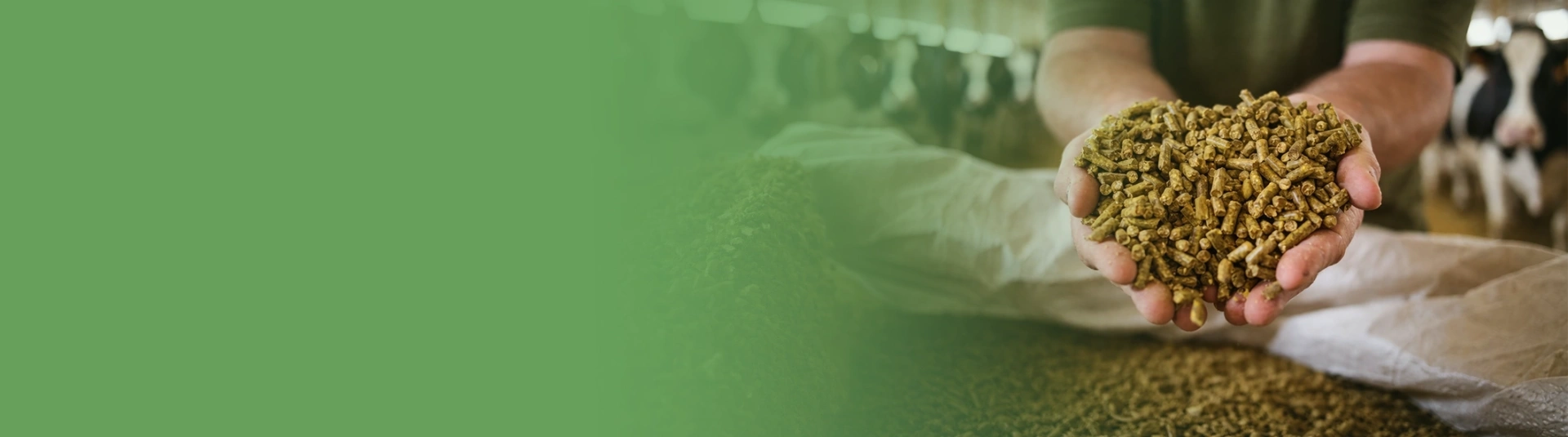
Cattle entering the feedlot need to transition successfully into grain-feeding programs, while rations need to be formulated and delivered consistently across an enormous number of animals.
Daily health checks and access to veterinary support form part of the management system.
From a 4Sight perspective, it reinforces something fundamental about commercial animal nutrition.
A nutritional strategy isn't valuable simply because it works theoretically. It needs to perform reliably within the realities of a commercial production system.
At Grassdale, those realities are amplified by scale.
Where small improvements become significant
Scale changes the way you think about efficiency.
When approximately 1,000 tonnes of feed is being delivered each day, relatively small changes in feed utilisation, animal performance or operational efficiency can potentially become significant when multiplied across an entire production system.
The same principle applies to animal health, water, labour and resources.
That was one of the valuable aspects of seeing Grassdale first-hand.
Rather than considering nutrition or livestock performance as isolated subjects, an operation of this size demonstrates how closely interconnected the different components of intensive cattle production really are.
From manure to agricultural resource
The scale of Grassdale also creates another challenge: what happens to the organic material generated by tens of thousands of cattle?
This was one of the most interesting aspects of the operation from a 4Sight perspective.
The WagyuEdge tour information describes a sophisticated manure-to-fertiliser enterprise processing approximately 100,000 tonnes annually.
Rather than viewing that material simply as waste, it can become an agricultural resource.
This creates a connection between intensive livestock production and another area increasingly important to Australian agriculture: how nutrients and organic materials can be recovered, processed and returned to productive farming systems.
For 4Sight, that broader systems thinking is particularly relevant.
Agriculture produces biological resources at every stage. Finding better ways to retain their value and return nutrients to productive soils has potential implications well beyond the feedlot itself.
Innovation at commercial scale
Grassdale also incorporates on-site power generation, substantial feed-storage infrastructure and cottonseed oil production as part of the broader operation.
Individually, each is interesting.
Collectively, they demonstrate the infrastructure and management required to operate an intensive livestock business at this scale.
Grassdale is not simply a large collection of cattle pens. It is a complex agricultural production system where nutrition, animal health, infrastructure, logistics, resource management and people all need to work together.
Seeing Australia's largest feedlot first-hand
One of the recurring benefits of the WagyuEdge tours has been the opportunity to see very different approaches to Australian beef and Wagyu production.
Pardoo Wagyu demonstrated what can be achieved by developing a production system around the opportunities and constraints of northern Western Australia.
Arubial Wagyu and Lillyvale demonstrated the integration of genetics, nutrition, feed efficiency, data and farming.
Grassdale provided another perspective again: what happens when many of those principles have to operate at enormous commercial scale.
For 4Sight, these visits are about more than seeing impressive agricultural businesses.
They help us better understand the environments in which animal nutrition and agricultural technologies ultimately have to perform.
As 4Sight continues to deepen its involvement with Australian Wagyu and beef producers, that first-hand understanding is invaluable.
4Sight visited Mort & Co’s Grassdale Feedlot as part of the Australian Wagyu Association’s WagyuEdge ’26 Post-Conference Tour.
Have questions about this topic?
Our team is ready to help with expert advice tailored to your operation.
Contact UsRelated Articles
In the Spotlight: Arubial Wagyu & Lillyvale
During WagyuEdge ’26, 4Sight visited Arubial Wagyu and Lillyvale Feedlot to see how genetics, nutrition, feed efficiency, data and integrated farming are coming together in a progressive Australian Wagyu production system.
In the SpotlightIn the Spotlight: Pardoo Wagyu
During the WagyuEdge ’25 Northern WA Tour, 4Sight visited Pardoo Wagyu to see first-hand how genetics, irrigation, feed production, technology and management are coming together in an ambitious Pilbara Wagyu operation.