In the Spotlight: Pardoo Wagyu
Vision, innovation and Wagyu production in Western Australia’s Pilbara
When 4Sight joined the Australian Wagyu Association’s WagyuEdge ’25 Northern WA Post-Conference Tour, one of the standout visits was Pardoo Wagyu.
Located on the north-west coast of Western Australia, Pardoo provided an opportunity to see first-hand what it takes to develop a Wagyu production system in an environment very different from the regions traditionally associated with premium beef production.
The scale is impressive. But perhaps more interesting is the thinking behind it.
Pardoo combines Wagyu genetics with substantial investment in water, irrigated feed production, infrastructure, technology and cattle management — creating a production system designed specifically around the opportunities and challenges of northern Western Australia.
A bold vision for Wagyu in the Pilbara
Pardoo Wagyu was established following the purchase of Pardoo Station in 2015.
Founder Bruce Cheung's vision was to develop a purebred Wagyu operation in the Pilbara capable of supplying quality Wagyu beef to domestic and Asian markets, while creating new opportunities for the region's pastoral industry.
That meant tackling some significant production challenges.
Pardoo Station itself spans more than 200,000 hectares along the Western Australian coastline, approximately 200 kilometres north of Port Hedland and 450 kilometres south of Broome. The environment includes sandplains, dunes, acacia shrublands and spinifex — conditions far removed from the temperate pastures many associate with intensive premium beef production.
The response has been to build a different kind of production system.
Water, pasture and feed
One of the most interesting aspects of Pardoo from a 4Sight perspective was the investment in the productive capacity of the land.
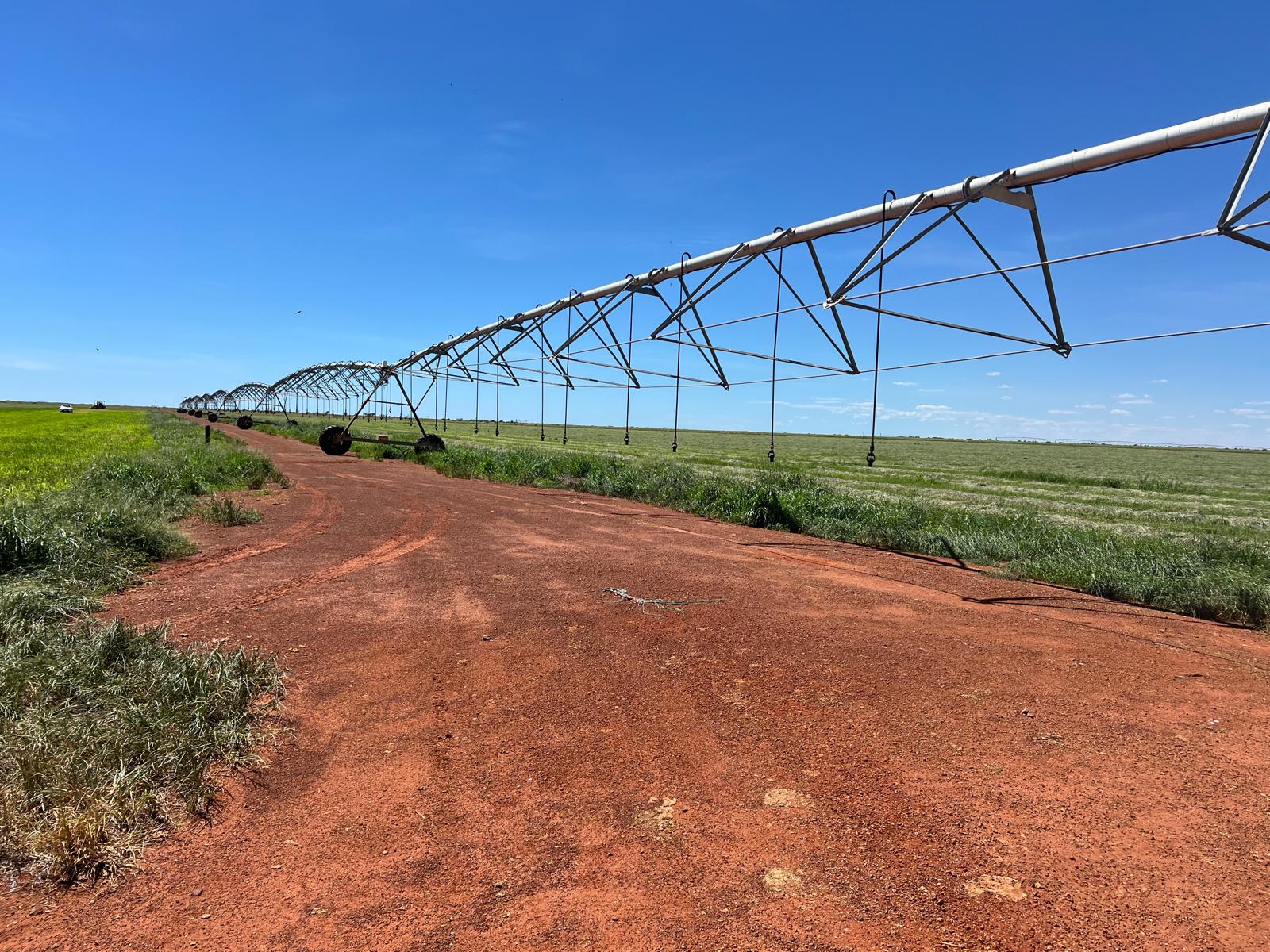
Irrigation is used to grow feed under centre pivots, including Rhodes and panic grass hay, while chicory has also been incorporated into the system.
This isn't simply infrastructure for infrastructure's sake.
Previous research undertaken through Meat & Livestock Australia's collaborative work with Pardoo examined the interaction between soils, irrigated pastures and crops, grazing management and cattle performance over several years. The work identified opportunities to improve practices across the production system and provided insights relevant to intensive beef production in northern Australian environments.
For 4Sight, that systems approach is particularly interesting.
Soil, plants, water, feed and cattle performance are not separate issues. Ultimately, they are interconnected parts of the same agricultural system.
Genetics supported by management
At the centre of the operation is, of course, Wagyu.
Pardoo Station is focused on Wagyu and Wagyu-cross cattle, with breeding programs incorporating artificial insemination and controlled joining. Technology is also being used to monitor liveweight performance and refine feeding decisions.
That combination of genetics and management is significant.
Elite genetics establish potential, but the production environment determines how effectively that potential can ultimately be expressed.
Nutrition, feed quality, water, animal health and management all become part of the equation — particularly when producing high-value cattle over an extended production cycle.
It's one of the reasons 4Sight is increasingly interested in the Wagyu sector.
Seeing the system first-hand
The WagyuEdge tour gave 4Sight an opportunity to see Pardoo beyond the statistics.
Delegates travelled from Port Hedland to Pardoo Station, met with Bruce Cheung and the Pardoo team, visited the irrigation pivots and spent the day at the operation before continuing north towards Broome the following morning.
Visits like this are valuable because they provide something that conferences, research papers and technical presentations can't completely replicate: context.
You see the environment.
You see the distances.
You see the infrastructure required to make the system work.
And you gain a much better appreciation of the practical challenges behind producing cattle in a particular environment.
Innovation doesn't always look the same
There is no single model for progressive agriculture.
What works on a high-rainfall property in southern Australia will not necessarily translate to the Pilbara.
Pardoo is interesting precisely because the business has had to develop around its environment — combining available water resources, irrigated feed production, genetics, technology and management to pursue a very ambitious objective.
For 4Sight, the visit reinforced the importance of continuing to get onto farms and stations, speaking with producers and seeing different agricultural systems operating first-hand.
As we increase our involvement with Wagyu producers, understanding those systems — and the challenges producers are trying to solve within them — will remain an important part of how we approach the sector.
Related: On the Road with WagyuEdge ’25: Northern WA Post-Conference Tour.
Have questions about this topic?
Our team is ready to help with expert advice tailored to your operation.
Contact UsRelated Articles
In the Spotlight: Grassdale Feedlot
During the WagyuEdge ’26 Post-Conference Tour, 4Sight visited Mort & Co’s Grassdale Feedlot to see first-hand what nutrition, cattle management and resource efficiency look like at Australia’s largest feedlot.
Industry EngagementBehind the Farm Gate: 4Sight on the WagyuEdge'26 Post-Conference Tour
4Sight goes behind the farm gate on the WagyuEdge'26 post-conference tour, visiting leading Wagyu, reproduction, feedlot and beef-processing operations across Queensland.
In the SpotlightIn the Spotlight: Arubial Wagyu & Lillyvale
During WagyuEdge ’26, 4Sight visited Arubial Wagyu and Lillyvale Feedlot to see how genetics, nutrition, feed efficiency, data and integrated farming are coming together in a progressive Australian Wagyu production system.