
Beyond the Product: Bringing Global Ruminant Nutrition Science Back to Australia
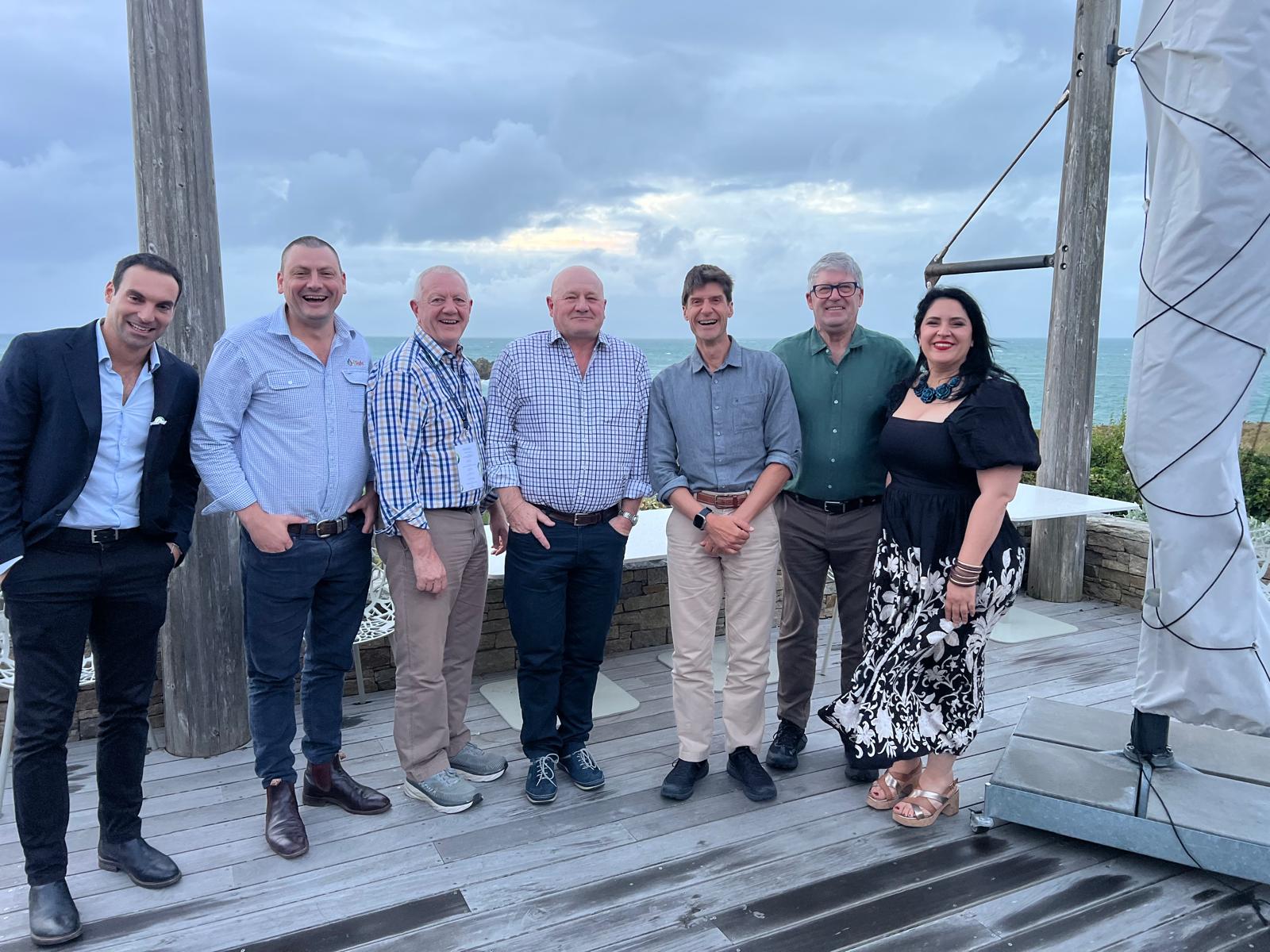
There is a significant difference between reading research and sitting across the table from the people responsible for it.
That was one of the most valuable takeaways when 4Sight represented Australia at the pHix-up® Academy 2026, hosted by Terresis in Saint-Malo, France.
The Academy brought together researchers, technical specialists and industry representatives to explore one of the enduring challenges in high-performance ruminant nutrition: maintaining a rumen environment that enables cattle to make effective use of increasingly energy-dense diets.
For 4Sight, however, the trip was about much more than learning about pHix-up®.
It was an opportunity to get closer to the science, the researchers and the thinking behind the technology.
Direct access to the people behind the research
Central to the Academy was Prof. Alex Bach, an internationally recognised dairy cattle nutrition researcher who has been directly involved in two peer-reviewed studies evaluating pHix-up® in lactating dairy cows.
That matters.
We weren't simply hearing claims about a product. We had direct access to a researcher who had experimentally challenged the technology, measured the response and published the findings in the Journal of Dairy Science.
That creates a very different conversation.
It provides the opportunity to ask questions, challenge assumptions, understand limitations and explore what controlled research could mean when translated into commercial feeding systems.
Sometimes, understanding what research doesn't demonstrate is every bit as important as understanding what it does.
That is an important part of how we believe agricultural technologies should be evaluated.
Looking beyond a rumen pH number
One of the central discussions throughout the Academy was the challenge of maintaining rumen stability as diets become increasingly energy dense.
High-performing cattle have substantial nutritional demands. Meeting those demands can increase the amount of rapidly fermentable carbohydrate entering the ration and place greater pressure on the rumen environment.
But the objective isn't simply to manipulate a pH number.
The bigger question is how we maintain a rumen environment that supports microbial activity, feed intake, fibre utilisation and effective use of the overall ration.
This is where the research surrounding pHix-up® becomes particularly interesting.
Prof. Bach and his colleagues have investigated the magnesium-based technology under controlled dietary challenges, including comparisons with sodium bicarbonate. Their work has examined rumen pH, dry matter intake, microbial populations and animal performance.
The findings provide valuable insights – but they deserve more than a paragraph of numbers.
Over the coming months, we'll explore that research in greater depth, including what it tells us about rumen pH, neutralising capacity, magnesium sources and feed intake.
Seeing what sits behind the technology
Another highlight of the Academy was visiting the Centre Mondial de l’Innovation (CMI) and seeing first-hand the research capability supporting technologies developed within the Terresis and Groupe Roullier network.
There is a significant difference between seeing a finished product and understanding what sits behind it.
You see the research process.
You meet the scientists.
You understand the questions being asked and the work required to answer them.
In the case of pHix-up®, its development included a three-year research process involving the screening and testing of magnesium sources before complementary sources were selected for the formulation.
That background provides context that can't be gained from a product specification sheet alone.
It helps us understand not only what a technology is, but why it was developed the way it was.
Bringing the science home
International research is valuable, but it cannot simply be copied and pasted into an Australian feeding program.
Australian dairy and beef production has its own conditions.
Our forage sources, grain types, climate, feeding systems, management practices and commercial realities all influence where a nutritional technology may – or may not – have a role.
That is where industry engagement becomes important.
Our job isn't simply to find products overseas and bring them to Australia.
It is to engage with the researchers and organisations behind them, understand the science, ask difficult questions and then work alongside Australian nutritionists, advisers and producers to determine where that knowledge can create practical value.
The pHix-up® Academy was part of that process.
It strengthened the connection between international research and Australian agriculture while giving our team direct access to people advancing our understanding of high-performance ruminant nutrition.
And the conversations don't finish when we leave France.
They come back with us.
Over the coming months, we'll share more of what we learned – taking a closer look at rumen pH, SARA, magnesium-based rumen neutralising technologies, neutralising capacity, feed intake and the peer-reviewed research behind pHix-up®.
Because agricultural innovation doesn't create value simply by reaching Australia.
The value comes from understanding the science well enough to know what to do with it.
Want to understand the science behind pHix-up®?
We're developing a series of practical technical articles examining rumen pH management, magnesium-based neutralising technologies and the peer-reviewed research behind pHix-up®.
Explore pHix-up® or talk to the 4Sight team about rumen pH management in your feeding system.
Have questions about this topic?
Our team is ready to help with expert advice tailored to your operation.
Contact UsRelated Articles
4Sight at Fieldays 2026: Strengthening Connections Across New Zealand Agriculture
4Sight returned to New Zealand Fieldays at Mystery Creek, reconnecting with clients, supporting partners and strengthening relationships across New Zealand agriculture.
Industry Engagement4Sight Visits Phileo by Lesaffre in Lille, France
4Sight visited Phileo by Lesaffre in Lille, France, gaining firsthand insight into its research, manufacturing and quality systems while strengthening relationships and exploring innovation in animal nutrition, biotechnology and microbial solutions.
Industry EngagementInside PDM Produce: Innovation at Commercial Scale
4Sight visits PDM Produce in Shropshire, one of the UK's leading fresh produce businesses, to see how innovation and commercial agriculture come together at scale.